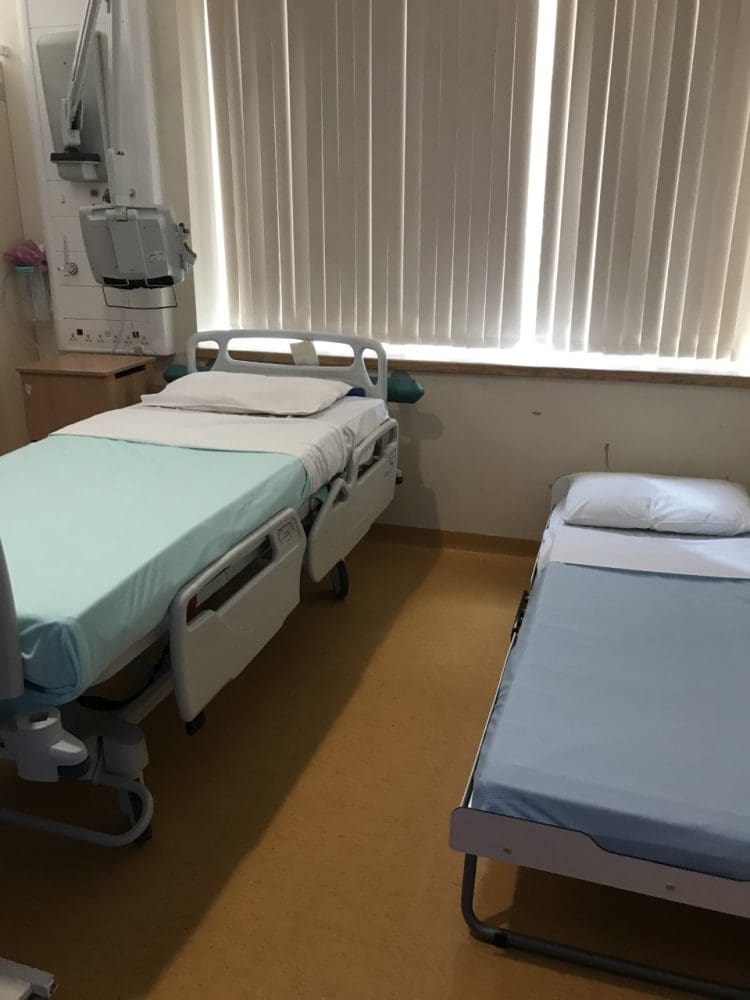
We are funding new cots for the maternity ward at Macclesfield District General Hospital, where at least 1,600 babies are born each year. Since every baby will need a cot to ensure sleep safety, the ward requires 26 to be available for postnatal women and their babies. In March 2020 the hospital suspended its inpatient maternity services because of the COVID-19 pandemic. The maternity department is now planning to reopen and is carrying out a review of its equipment. The existing cots are decades old, some are damaged, and may not comply with enhanced infection control regulations. Unfortunately, there is no NHS funding to replace them, so we have agreed to provide 12 new cots for the department.
Donate now
More Projects
Warrington & Halton NHS Trust – Resuscitaire and Mobile Telemetry Unit
Warrington & Halton NHS Trust Midwifery Led Unit / Active Birth Centre opened in 2013. It consists of 3 ‘low risk’ rooms and 2 fixed birthing pools and is currently accessed via the labour ward triage. The plan is to upgrade the MLU into a standalone unit to treat childbirth as a normal experience with […]
Find out more →
Fully Funded
St Nicholas School, Canterbury – Soft Play Room
Canterbury
St Nicholas School in Canterbury caters for around 360 pupils aged between four and 16 with profound, severe and complex special needs. Some of the most common conditions affecting the young people are cerebral palsy, global developmental delay, autism spectrum disorder, and fetal alcohol spectrum disorders. The school are redeveloping their soft play room to […]
Find out more →
Fully Funded
Croydon University Hospital – incubator
One in seven babies in the UK needs specialist neo natal care after they are born. These babies may be born too early or with a low birth weight, or have a medical condition that needs treatment. Nearly 3,500 children are born in Croydon University Hospital every year, with over 400 babies requiring a stay […]
Find out more →
Fully Funded
“The new beds for parents have had such a positive impact on the wellbeing of our children knowing their parent or carer is close by. But also for the parent being able to sleep comfortably next to their child has made such a difference to how they have responded to staff during difficult times on the ward. The difference a good night’s sleep makes is priceless.”
Vicki Healey
Children’s Ward Manager
North Manchester General Hospital