
Apply →
Menu

North Manchester General Hospital cares for babies, children and adolescents with a variety of needs.

Sensory Voyager

The Neonatal unit admits a large number of term and pre term babies and, as a Level 2 unit, also accepts a number of babies born at 23 weeks and above from other hospitals. These babies often stay on the unit for up to 6 months and would benefit greatly from both a stimulating and calming sensory environment. The Sensory Voyager is a portable sensory studio which can be used to create a fantastic sensory space in any room. The equipment on the Voyager includes a waterless bubble tube, UV fibre optic strands and a projector wheel for lighting effects and images. There is colour control and an MP3 sound system to complete the sensory atmosphere. The system is lockable and has a dust cover for protection when not in use.

North Manchester General Hospital has requested a Sensory Voyager to calm and stimulate babies during their stay on the Neonatal Unit. The Sensory Voyager will benefit more than 526 babies a year, aiding their development and giving them and their carers a better experience during a stressful time.

The total cost of providing this equipment is £4340.50

Distraction Equipment

Paediatric Outpatients at North Manchester General Hospital is a busy department caring for a variety of patients aged 0 to 16 years. There is a treatment room and a number of clinic rooms that require upgrades to be more child friendly particularly for patients with special needs. Hospitals can be frightening places and when a child is anxious or distressed, it is harder for medical staff to treat them which can affect the child’s health and ability to recover.

The Sensory Voyager plus a variety of mobiles, activity centres and hand held sensory toys and games will enhance the facilities further and give the patients a better experience of hospital visits.

North Manchester General Hospital Children’s Outpatients has asked MedEquip4Kids to provide a Sensory Voyager and additional sensory equipment to relax and distract patients during their treatment. These items will benefit more than 2,500 children a year.
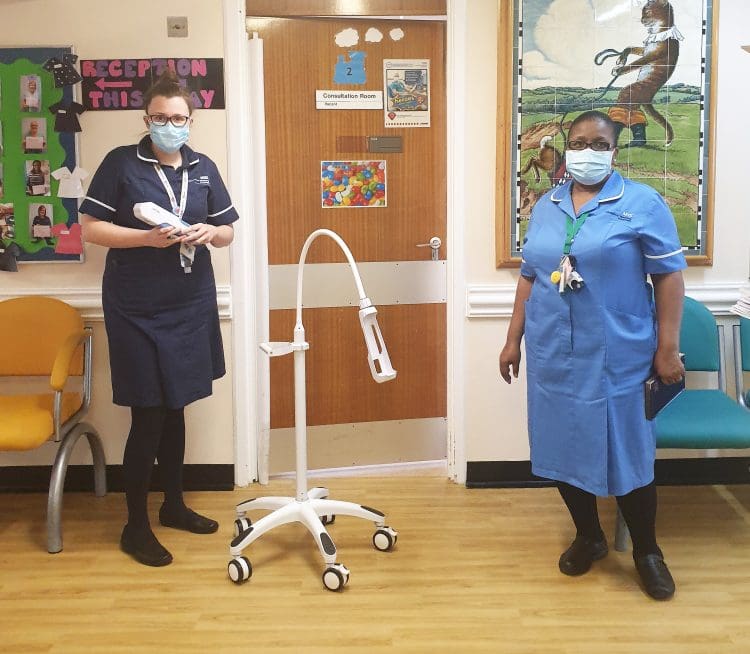

The total cost of providing this equipment is £5,878.60

Donate now

Donate Amount(Required)

More Projects

Stepping Hill Children’s Emergency Department – Toys for Distraction

Stockport

The new Children’s Emergency Department at Stepping Hill Hospital is in need of toys and activities to distract and calm the 25,000 children that they treat each year. The department sees children from 0-15 suffering from a variety of medical and surgical conditions, injuries and mental health crisis. Children attending the Emergency Department (ED) can […]

Find out more →
Currently Fundraising

NWTS – Intellivue MP5 Monitor

The North West and North Wales Paediatric Transport Service (NWTS) provide 24/7 stabilisation and transfer of critically ill children and babies. They mobilise from the base in Warrington with ambulance, clinical specialists and equipment to any district hospital in the North West and North Wales. The child/baby is transferred receiving full intensive care to regional […]

Find out more →
Fully Funded

Firwood High School, Bolton – postural management equipment

Firwood High School in Bolton caters for pupils aged 11-18 with cerebral palsy, severe or profound learning disabilities, and other physical conditions. The school is in need of some new mats and wedges for pupils to use when stretching and doing physio exercises. The equipment will be used for up to five years.

Find out more →
Fully Funded
View all projects →

“The specialist treatment chairs are a new vital resource for the therapy team and nursing staff to be able to safely and comfortably sit extremely complex, dependant, critical care patients out of bed. The chairs allow us to begin the patient’s rehabilitation journey by providing appropriate postural support at the same time as pressure relief to allow the patient to build the muscle strength to hold themselves up against gravity. This allows them to begin to interact with their environment in a more normal way, enabling them to participate in meaningful activities such as meal times and activities of daily living.”

Physiotherapy Team
Critical Care Unit
Royal Preston Hospital

Sign Up To Our Newsletter

By signing up to our newsletter you agree to our privacy policy