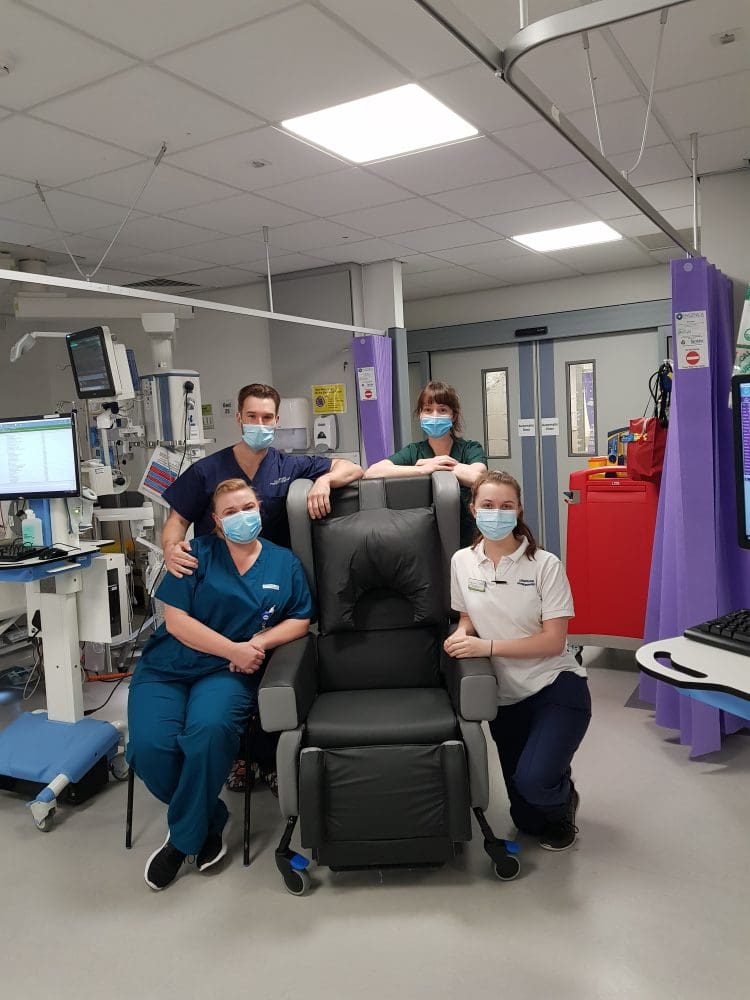
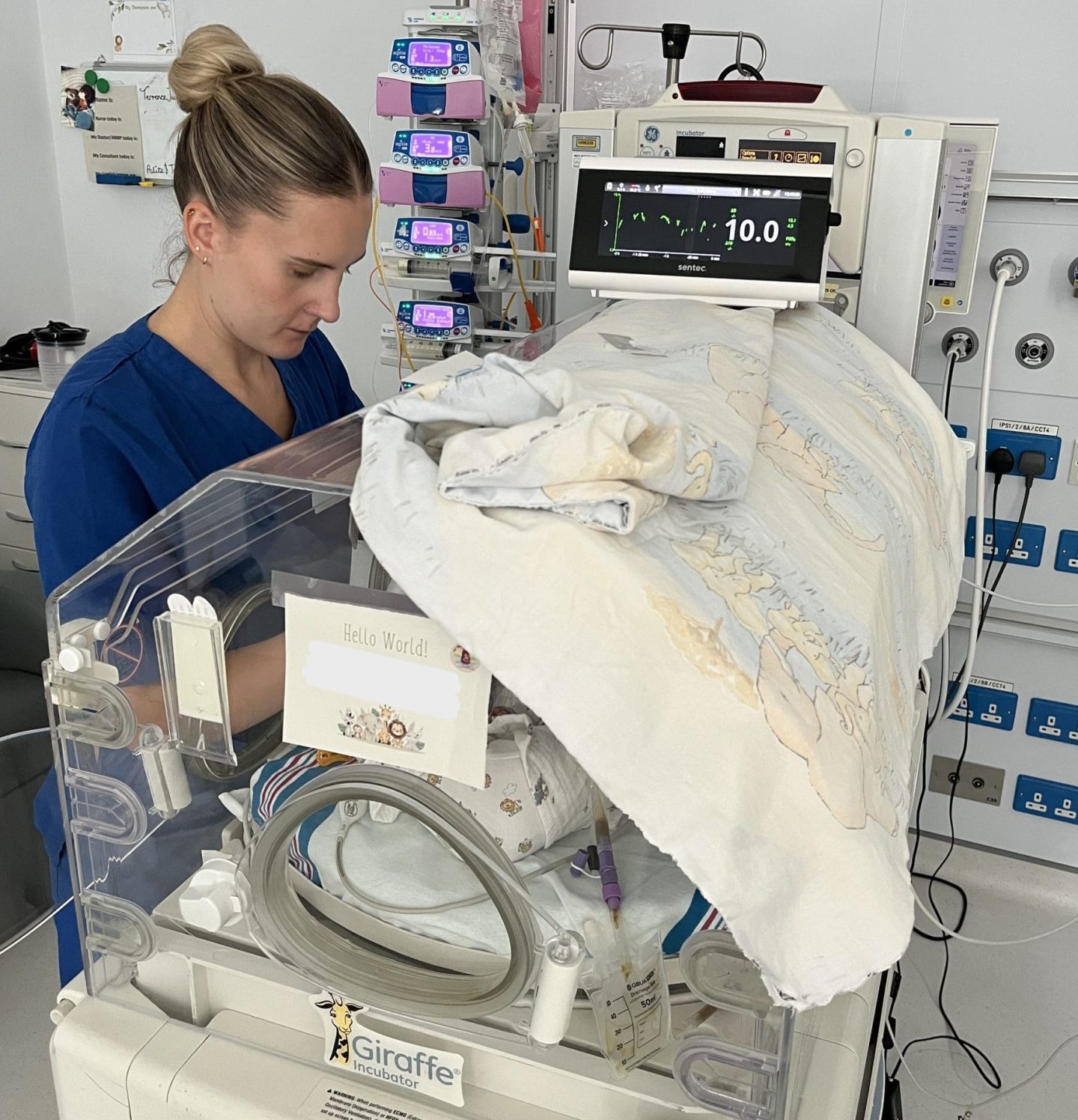
A huge thank you to VINCI Building for funding two transcutaneous carbon dioxide (TcCO2) monitors for the Neonatal Intensive Care Unit (NICU) at Liverpool Women’s Hospital.
These life-changing pieces of equipment provide 24/7 CO2 monitoring for premature and critically ill babies — some born weighing less than a pound.
For these tiny babies, ventilation is often essential to support their developing lungs. Monitoring the exact amount of carbon dioxide in their bloodstream is vital, as levels that are too high or too low can lead to serious complications including brain injury, lung damage, and cardiovascular problems.
Previously, this monitoring relied on regular heel-prick blood tests — a painful and distressing process that repeatedly disturbed babies during the vital rest they need to grow and recover. It also placed additional pressure on nursing staff in an already demanding environment.
Now, thanks to the new TcCO2 monitors, babies can be continuously monitored without unnecessary disruption, allowing them to rest while remaining safely under close observation.
One father we spoke to described how distressing the heel-prick tests had been for his newborn son.
“Each time he cried, it brought tears to my eyes,” he told us, pointing to the tiny needle marks on his baby’s foot. “The monitors have made a massive difference — now he gets the rest he needs.”
We also met Polite, mum to baby Terrance, who was born at just 24 weeks. Before the TcCO2 monitor was introduced, Terrance required constant ventilation and heel-prick blood tests every four hours. Each disturbance meant less precious sleep — something crucial for his growth and development.
And baby Tommy, born at 26 weeks alongside his twin brother, also relied on constant ventilation and intensive care. Using the TcCO2 monitor, nurses were able to identify trends in Tommy’s CO2 levels in real time and adjust his ventilation immediately — without the need for repeated blood tests or unnecessary disturbance.
This ability to monitor changes moment by moment not only improved Tommy’s care, but gave his parents reassurance that staff could respond quickly and effectively.
Emma Coombe, Lead Advanced Nurse on the Neonatal Intensive Care Unit, told us how much care has advanced for extremely premature babies. She explained that technology like the TcCO2 monitors is helping staff protect and care for increasingly complex cases, while also freeing up valuable nursing time to respond to urgent needs elsewhere on the ward.
Equipment like this is transforming neonatal care — reducing pain, improving outcomes, and giving families greater peace of mind during some of the most difficult moments of their lives.
Thank you, VINCI Building, for helping provide safer, gentler care for some of Liverpool’s most vulnerable babies.