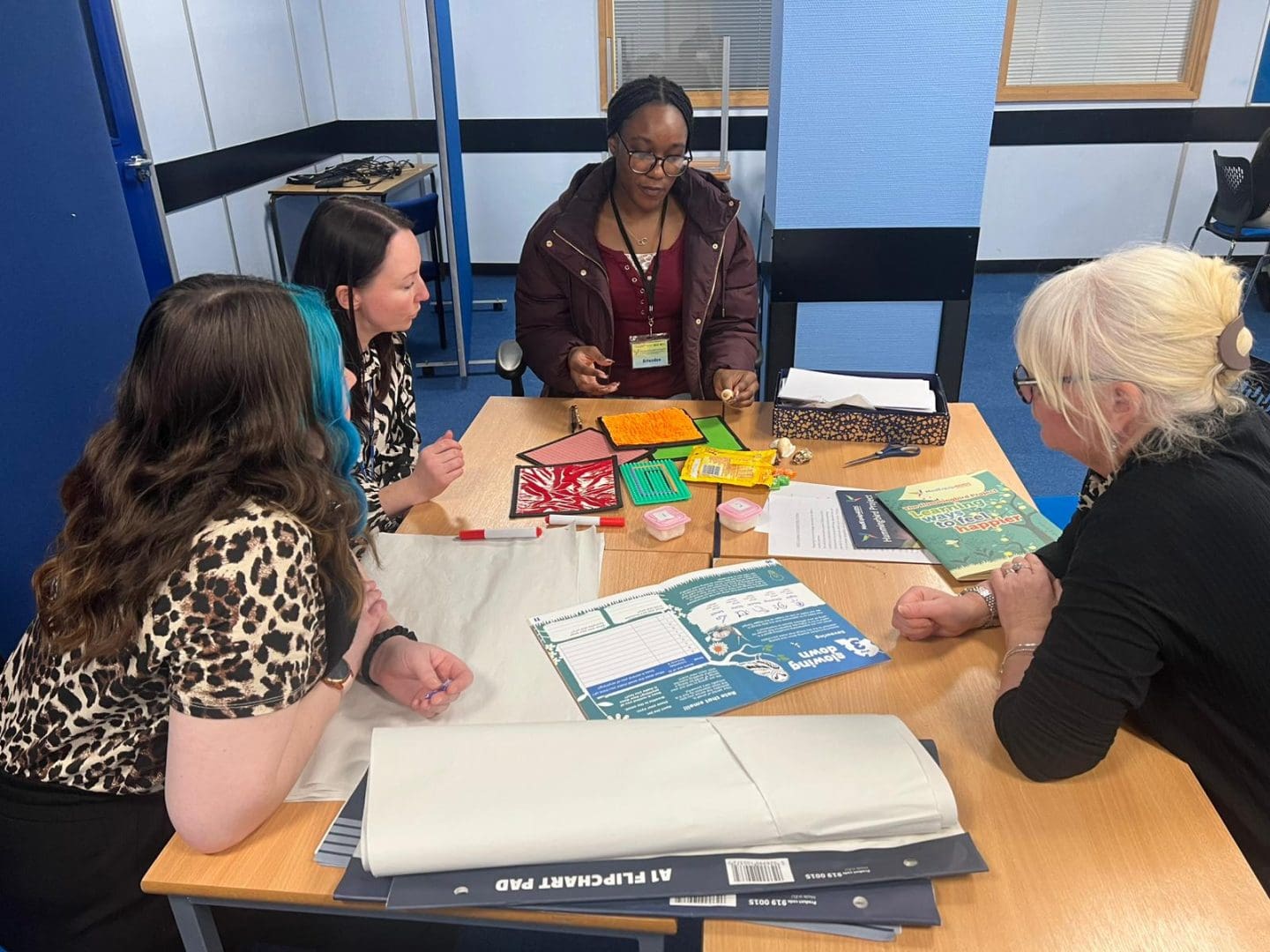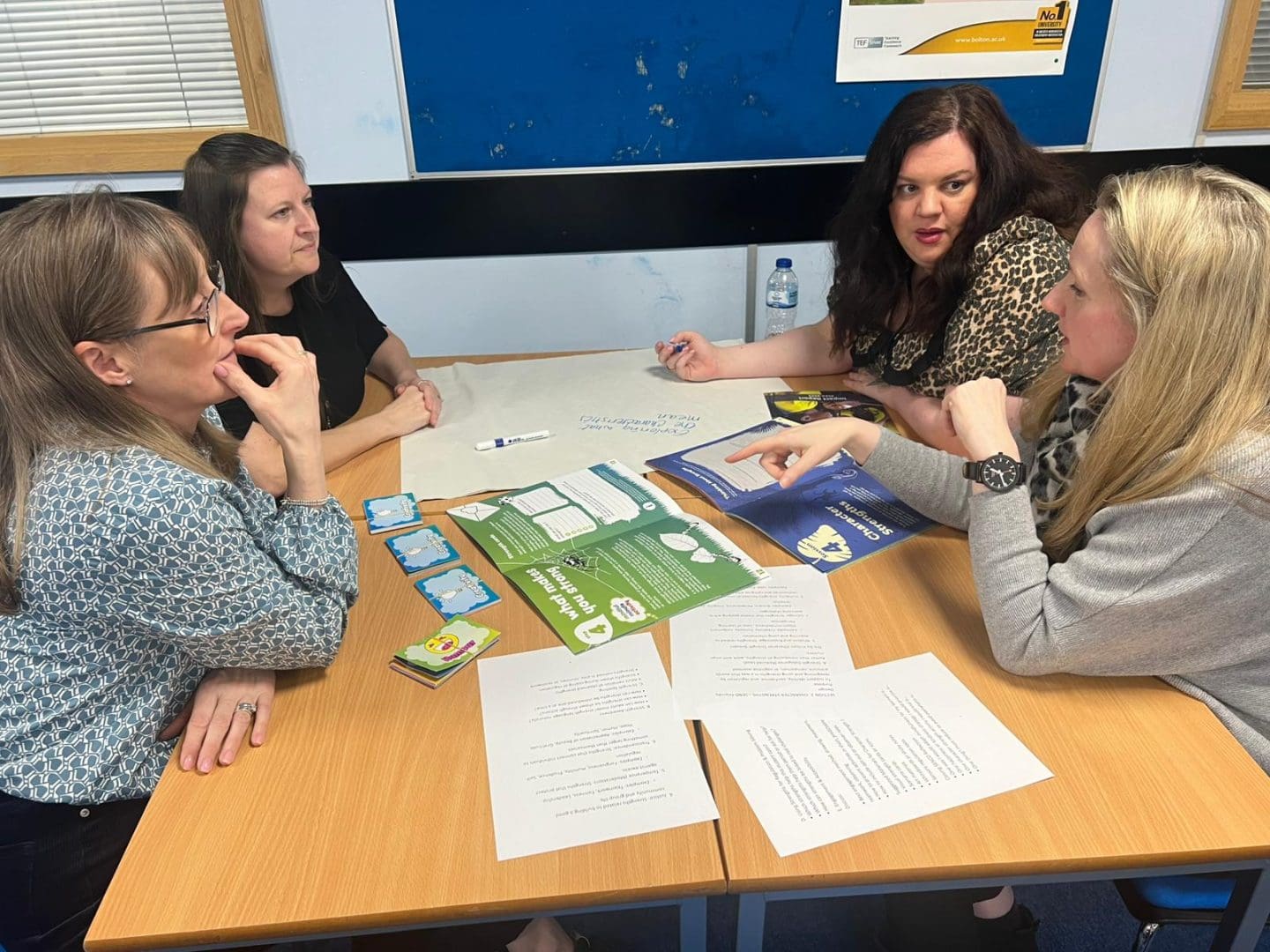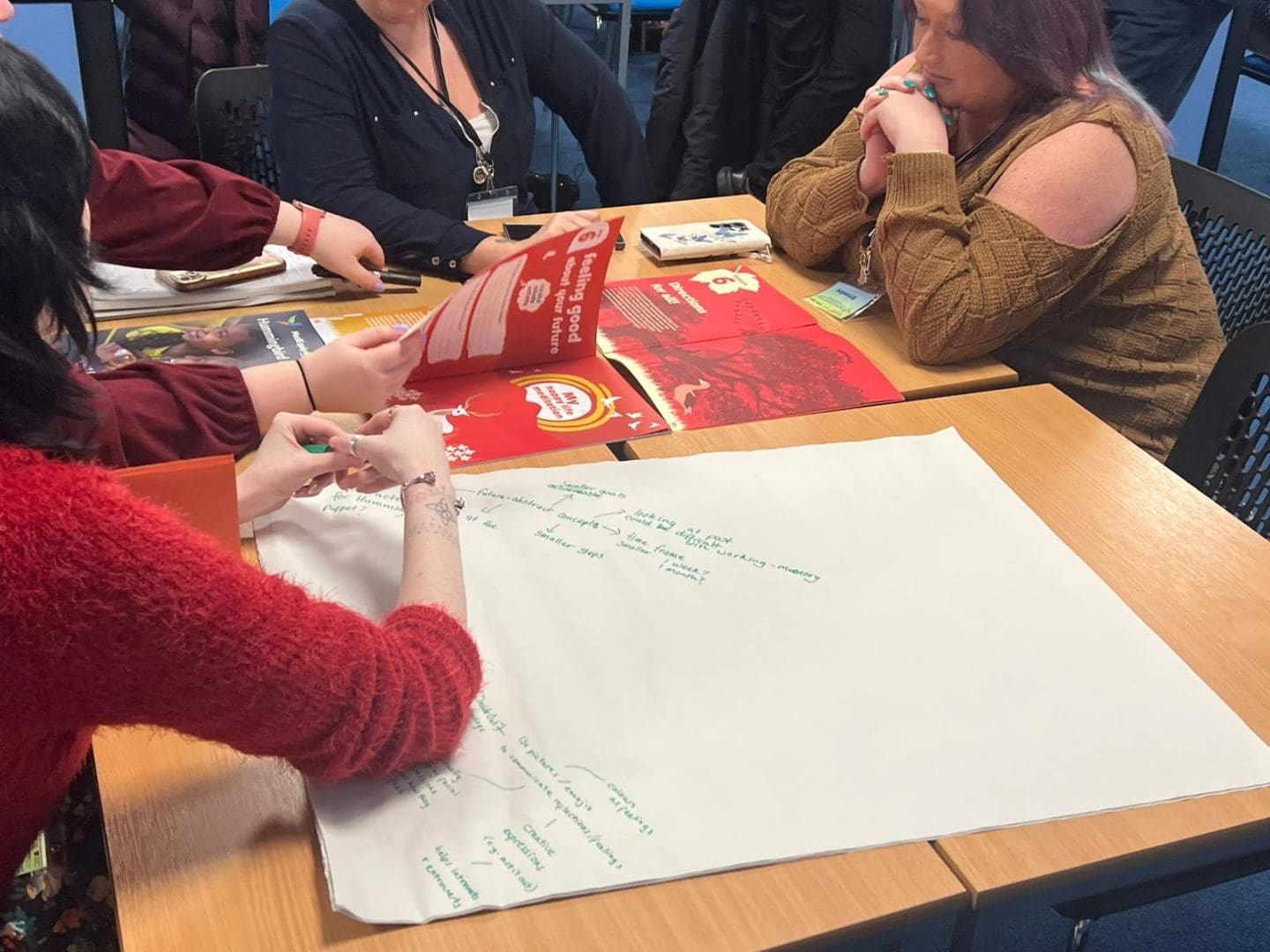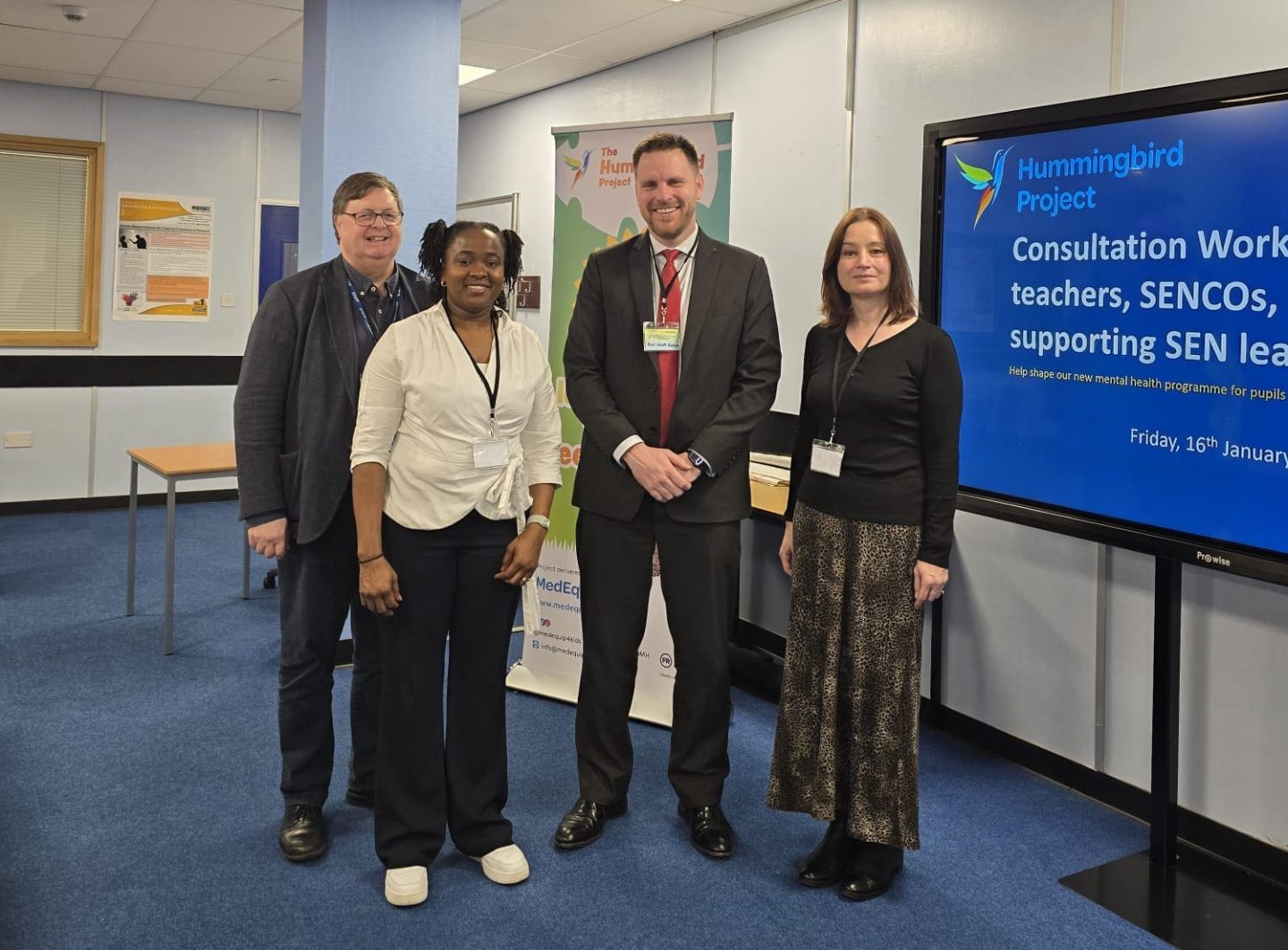
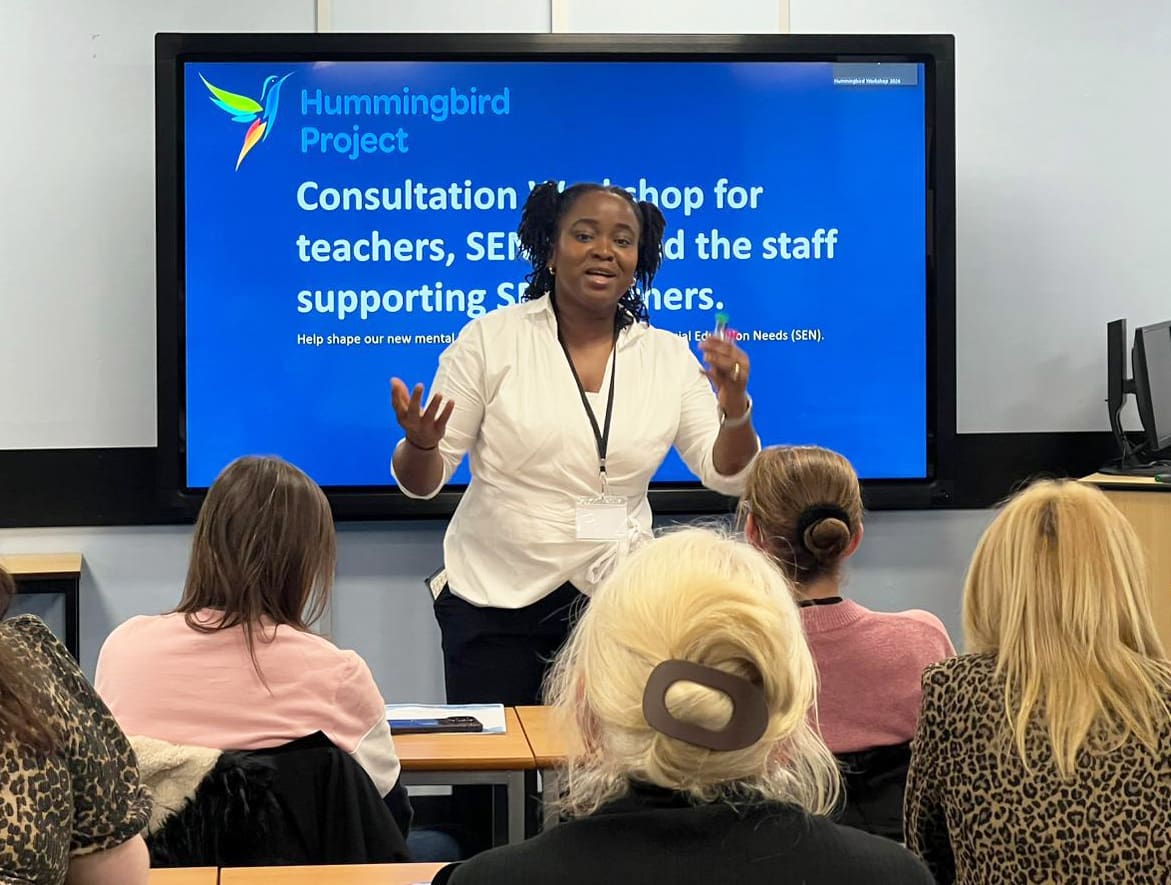
In January this year, we held a consultation workshop at the University of Greater Manchester for SENCOs and other teaching staff from across the North West, to begin co-designing a version of the Hummingbird Project adapted for learners with special educational needs (SEN), particularly those with autism and ADHD.
We received so many fantastic suggestions from staff who work with SEN pupils, who emphasised that wellbeing education must be flexible, sensory-friendly, visual, and built around children’s individual communication styles.
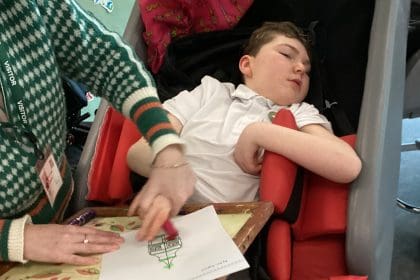
In April, Hummingbird Project Co-ordinator Sonia Ebenezer-Bamigbayan (pictured above at the SENCO event) had the chance to try out some of these ideas at Maple Grove School in Chester, a school for pupils aged 5-18 with autism and other additional needs. Drawing directly on the ideas shared by SENCOs, Sonia adapted her activities to meet pupils’ sensory and communication needs.
For example, one of the Hummingbird multisensory sessions involves smelling different scents in jars and guessing what they are, which can be fun, but may also be over-stimulating for some pupils with additional needs. Sonia offered alternative activities such as listening to seashells or using tactile sensory materials.
Staff at Maple Grove School told us: “The Hummingbird Project has helped our pupils to talk about feelings, and their strengths, with an unfamiliar adult. They have learned to talk about and embrace their strengths. They know who to reach out to if they are not having the best day. Reflecting on how to be happy will help them when they are struggling with their mental health.”
We would like to say a special thank you to the Sir Halley Stewart Trust for funding our research into the mental health education needs of SEN pupils.